In Part 1 of this series, we established the core problem facing cybersecurity today: it still operates as an open-loop system. Tools detect alerts, behaviors, and anomalies, but they do not enforce whether systems remain in a known-good, trusted state. As a result, security teams are perpetually reacting to symptoms rather than preventing the loss of integrity.
In this second installment, we move from diagnosis to solution. By combining integrity assurance with Secure Access Service Edge (SASE), organizations can finally close the loop.
Together, these disciplines directly address the only two actions a bad actor can take once inside an environment:
- Snoop and exfiltrate data
- Add, modify, or delete system components
More importantly, this convergence operationalizes Zero Trust, delivers the long-awaited answers to Comply-to-Connect (C2C), and fundamentally changes how ransomware is stopped.
SASE: Governing Access and Authorization
Modern Secure Access Service Edge solutions are explicitly designed to mitigate a bad actor's ability to snoop, move laterally, and exfiltrate data by enforcing identity-aware access, microsegmentation, encrypted paths, and continuous access evaluation.
This dramatically reduces exposure and blast radius.
But Zero Trust itself begins with an uncomfortable assumption: eventually, some adversaries will get past the wire. Whether through stolen credentials, trusted insiders, supply-chain compromise, or zero-day exploitation, attackers ultimately operate inside systems, not just on the network.
This reality elevates integrity assurance from a secondary control to a primary condition for Zero Trust access.
Integrity as a Condition of Zero Trust Access
Zero Trust access decisions are often based on identity and context:
- Who is the user?
- What device are they using?
- What are they connecting from?
But one question is often under-enforced: Is the system itself still trustworthy?
By continuously validating that devices and workloads remain in a known-good, hardened, and policy-compliant state, integrity assurance provides authoritative evidence for whether a system should be allowed to connect to a Zero Trust network at all, and whether it should remain connected.
When integrity deviates, access can be dynamically restricted or revoked, and systems can be automatically restored to a trusted baseline before re-admission.
In this model, Zero Trust is no longer based solely on identity and context. It is based on verified system integrity, transforming access definitions from assumptions into enforceable security guarantees.
Once Inside the Network, the Problem is State - Not Access
Zero Trust begins with "assume compromise."
Once an attacker is past the wire, authenticated, authorized, or otherwise present in your environment, access controls alone are insufficient.
At that point, the attacker can:
- Explore systems and attempt data exfiltration
- Change system state by adding, modifying, or deleting files, configurations, binaries, or settings
SASE excels at governing who can access what, from where, and under what conditions. It constrains movement, limits exposure, and protects data paths. But SASE does not define or enforce whether the systems themselves remain trustworthy.
That responsibility belongs to integrity assurance.
Integrity Assurance: Controlling What Attackers Can Change
Every meaningful attack, ransomware, zero-day exploitation, insider abuse, or supply-chain compromise requires unauthorized change. Malware must write files. Persistence requires configuration changes. Privilege escalation alters binaries or policies.
Integrity assurance focuses precisely on this unavoidable reality.
It does so by enforcing a closed-loop change control system that:
- Defines a cryptographically trusted baseline
- Detects all changes in real time
- Reconciles change against authorization and policy
- Prevents unauthorized modification
- Rolls systems back to a trusted state instantly
Unlike threat-based tools, integrity tools do not ask: "What kind of attack is this?"
They ask a simpler, more powerful question: "Should this system look like this right now?"
If the answer is no, the response is immediate.
Where SASE and Integrity Assurance Converge
SASE and integrity assurance solve complementary halves of the same problem.
- SASE governs access, identity, and data movement
- Integrity assurance governs system state, configuration, and change
Together, they form a closed-loop security model.
When SASE evaluates whether a device, workload, or user should be granted access, integrity assurance provides authoritative, real-time evidence of:
- Whether the system is hardened
- Whether it has drifted from policy
- Whether unauthorized changes have occurred
- Whether it can be trusted right now
Access decisions stop being based on assumptions and start being based on verified integrity.
Solving Comply-to-Connect (C2C)
Comply-to-Connect (C2C) has long promised conditional access based on device posture.
But posture checks alone are superficial if integrity is not continuously enforced.
Integrity assurance enables C2C to:
- Continuously validate that devices and workloads remain in a known-good state
- Detect and block access when an unauthorized change occurs
- Automatically restore systems to compliance before re-admission
Instead of periodic checks or static attestations, C2C becomes a continuous enforcement model, one that verifies compliance before, during, and after access.
Compliance is no longer a prerequisite. It becomes a runtime condition.
Ransomware: From Recovery to Prevention
Most ransomware strategies are reactive:
- Detect encryption activity
- Isolate systems
- Restore from backup
- Rebuild and recover
Integrity assurance changes the equation.
Because ransomware must modify files, binaries, and configurations to execute, integrity controls:
- Detect ransomware activity at the moment of unauthorized change
- Prevent or immediately reverse malicious modifications
- Restore systems to a trusted baseline in seconds - not days
This is not just a faster recovery. This is an attack collapse.
Ransomware fails not because it is identified by name, but because it cannot change the system without being stopped or undone.
Zero Trust: From Framework to Enforceable Architecture
Much of Zero Trust's value remains theoretical because its tenets are implemented in isolation.
Integrity assurance and SASE collapse the most critical ones into a single operational model:
- Continuous verification becomes real-time integrity validation
- Minimizing blast radius is continuously enforced by preventing and reversing unauthorized change
- Automation and enforcement are achieved through a closed-loop control process
- Instead of policies, alerts, and manual response, Zero Trust becomes self-enforcing
Aligned with guidance such as NIST SP 800-53, this model turns Zero Trust from a strategy to an engineered control system. Instead of policies and alerts, you get measurable enforcement.
From Visibility to Control
Security does not fail because organizations lack visibility. It fails because visibility is not paired with control.
Integrity assurance provides the missing control plane, one that defines trusted state, enforces authorized change, and restores trust instantly. SASE ensures that only trusted identities and systems can communicate and move data.
Together, they transform cybersecurity from:
- Reactive to proactive
- Detection-focused to prevention-driven
- Open-loop to closed-loop
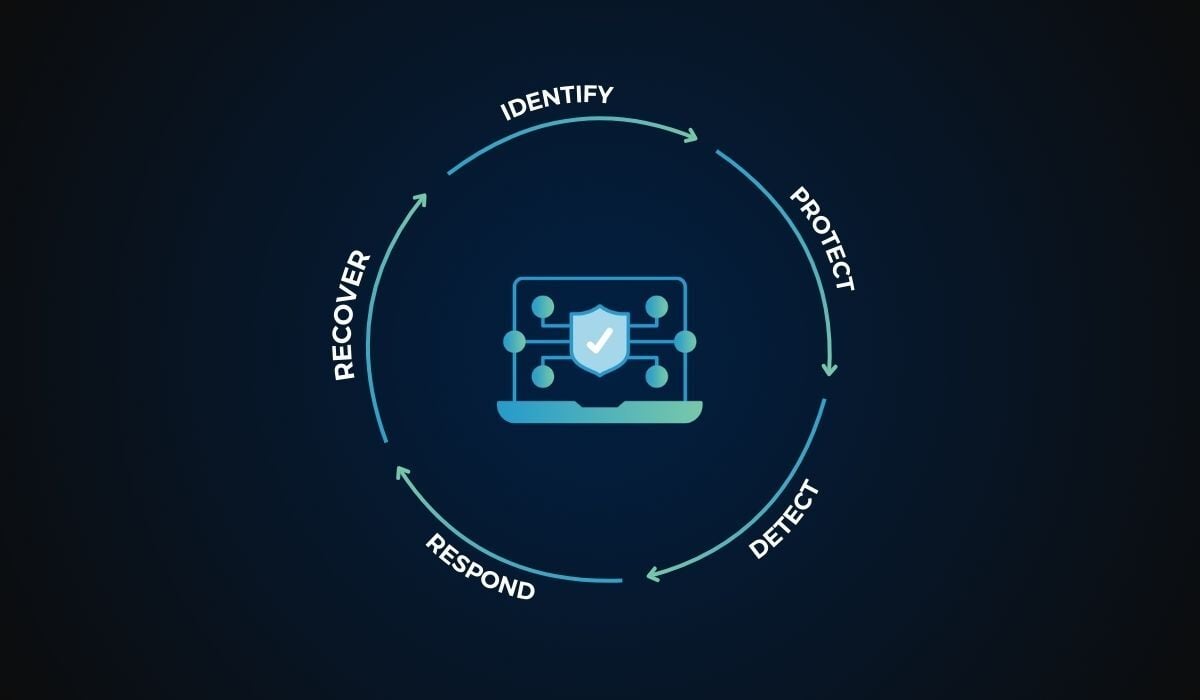
This is how organizations finally protect, detect, respond, and recover, not just faster, but before damage is done.
In the end, Zero Trust is not about trusting less.
It's about verifying more and enforcing always.

March 10, 2026
Try CimTrak for Free
Get your Free 14-day trial of CimTrak
Just let us know what capabilities you want to test out, and we'll set up a trial in your environment.